
Why it is on the list
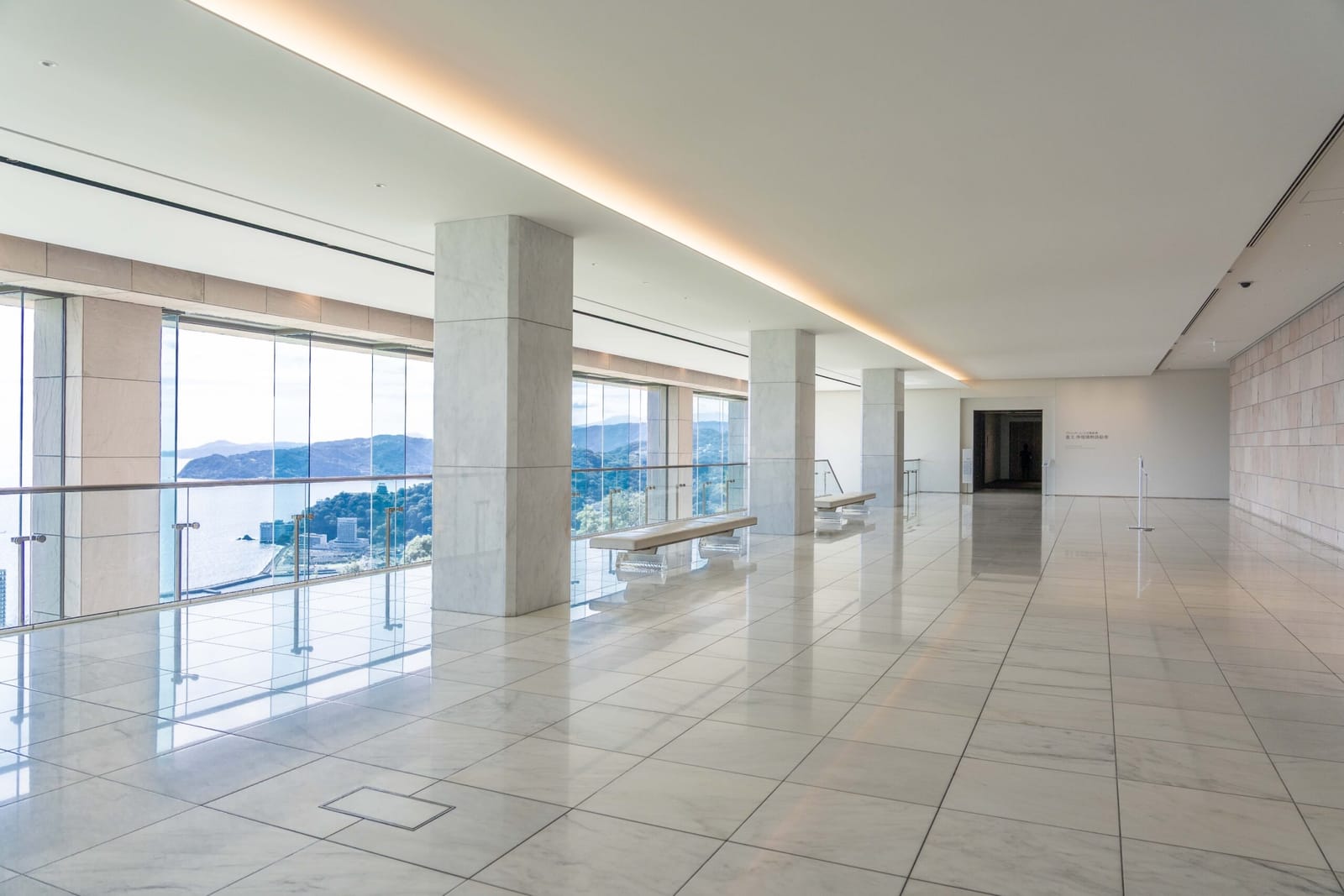
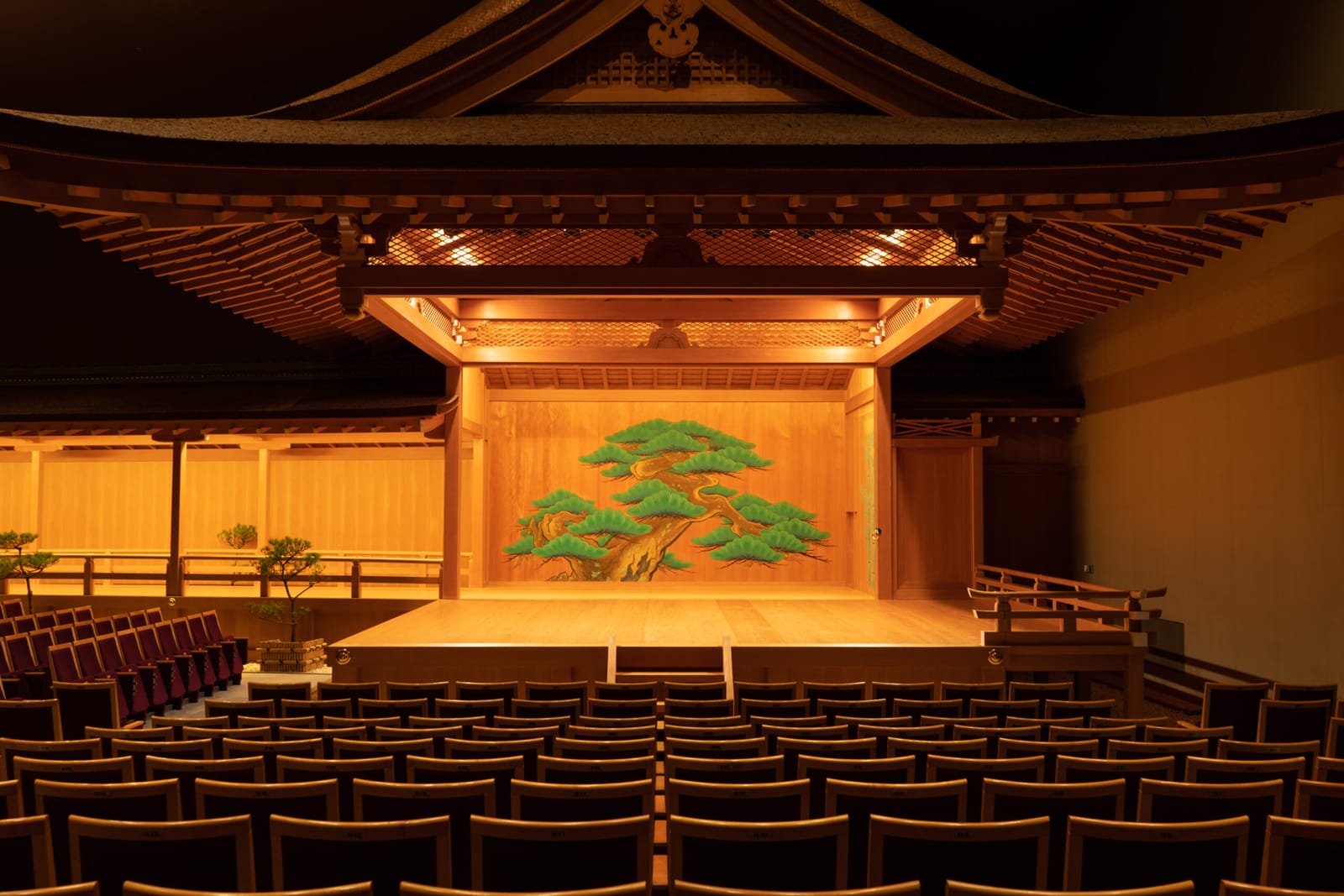
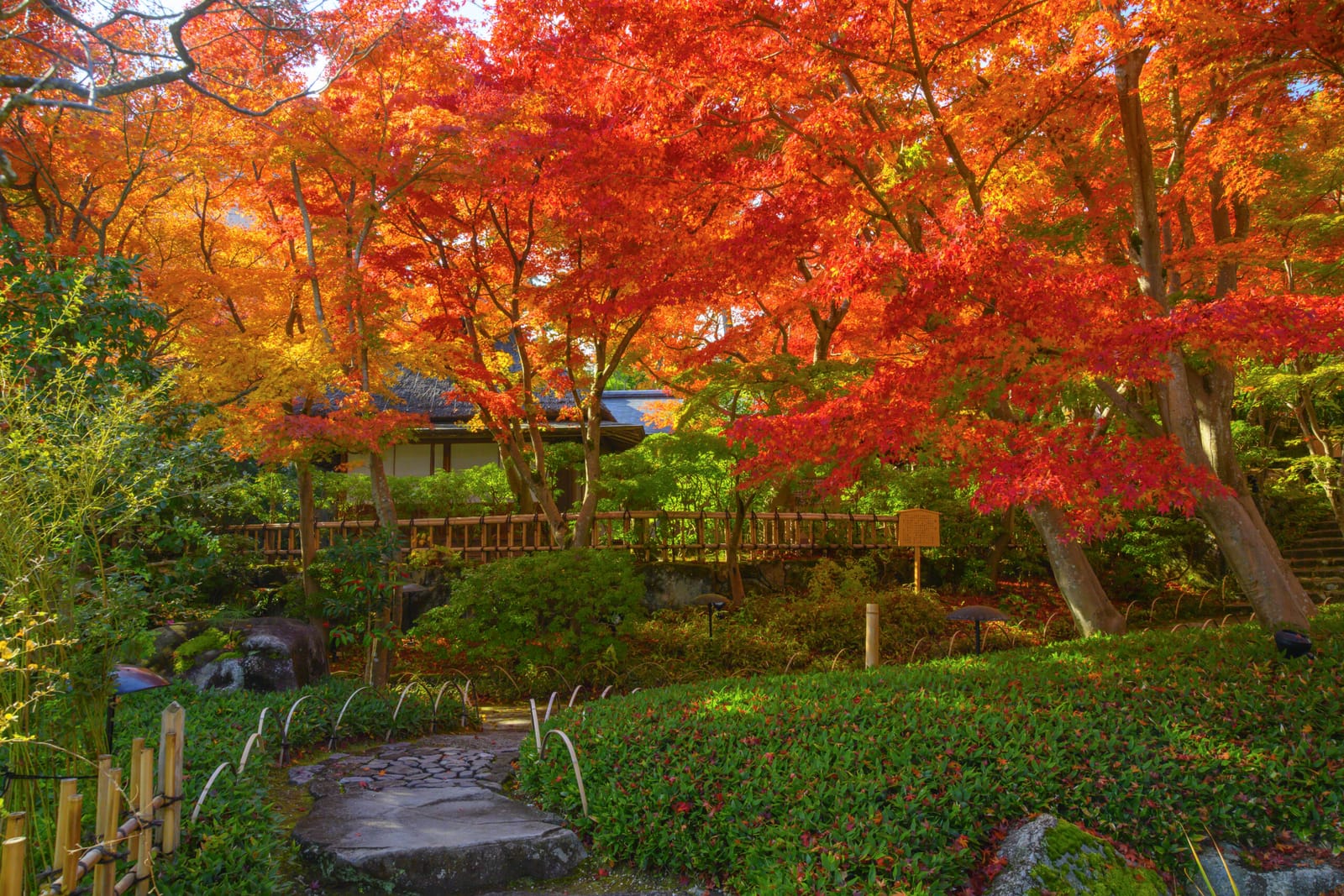
The collection runs to about 3,500 works, with three National Treasures: Ogata Kōrin's Red and White Plum Blossoms screens, Nonomura Ninsei's tea-leaf jar with a wisteria design, and the calligraphy album Tekagami Kanboku-jo; 67 more pieces are Important Cultural Properties.1 In 2016 and 2017 the galleries and common areas were rebuilt over eleven months by the New Material Research Laboratory of Hiroshi Sugimoto and Tomoyuki Sakakida.2 The main building stands 270 m above the sea; the lobby window is 8 m high and 32 m wide and faces the ocean, and the grounds hold a Noh theatre with a cedar stage, a reconstruction of Kōrin's last house with the upper-floor studio where the plum screens are believed to have been painted, and the teahouse Ippaku-an by Nahiko Emori.3
For landscape and architecture rather than a collection, take Enoura Observatory instead. It closes on Thursdays, except on national holidays, and at other times between exhibitions.4
How to get it
From Atami station, a taxi takes about 7 minutes, or the bus from stand 8 of the station bus terminal to its last stop; by car from Tokyo it is about 2 hours, with 200 free spaces by the 3rd floor entrance.4 Hours are 9:30 to 16:30, last entry 16:00, and adult admission is 2,000 yen; no time slot is needed.4 For lunch, the kaiseki at Nijo-shinmachi Etsu in the tea garden is only for groups of five or more, 11:00 to 14:00, booked by phone on +81 557 84 2511 between three weeks and three days ahead; it is closed on Thursdays and Fridays and served only to museum visitors.5
Discretion
Arriving by car, use the 3rd floor entrance, where the car park is; the other way in is a 200 m underground run of escalators from the lower gate.43 Still photographs for personal use are allowed, but not of loaned works, and flash, tripods and selfie sticks are not.6
Sources
- MOA Museum of Art. en.wikipedia.org, read 24 September 2026.
- Architecture. moaart.or.jp, read 24 September 2026.
- Architectural Features. moaart.or.jp, read 24 September 2026.
- Guide. moaart.or.jp, read 24 September 2026.
- Nijo-shinmachi Etsu. moaart.or.jp, read 24 September 2026.
- Frequently Asked Questions. moaart.or.jp, read 24 September 2026.
- MOA Museum of Art. moaart.or.jp, read 24 September 2026.
Last checked 24 September 2026, against the venue's own pages. The next check is due by 23 December 2026.